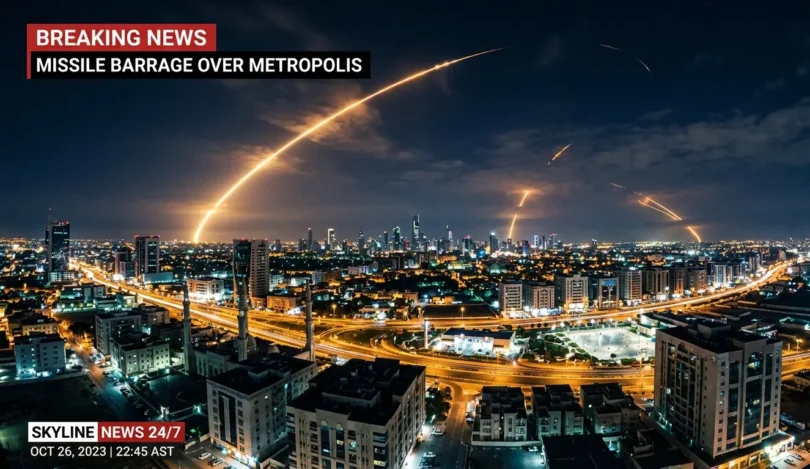
The Middle East is currently witnessing a tectonic shift in its security landscape. Recent developments have transcended traditional frontline skirmishes, reaching into the very heart of regional leadership and exposing critical vulnerabilities in Western defense umbrellas. As tensions between major regional powers reach a boiling point, the world is watching a high-stakes game of attrition that could redefine global hegemony for decades to come.
Table of Contents
The Inner Circle: Reports of High-Profile Casualties
For months, the conflict has been characterized by strategic ambiguity, but recent reports suggest that the “red lines” have not only been crossed but obliterated. According to former U.S. Marine Corps intelligence officer and UN weapons inspector Scott Ritter, recent precision strikes have targeted locations previously deemed “impenetrable.”
Ritter’s analysis suggests that the latest missile barrages were not merely symbolic. He points to evidence indicating that residences of top-tier Israeli officials, including Prime Minister Benjamin Netanyahu and National Security Minister Itamar Ben-Gvir, were within the strike zones. While official channels maintain a strict “media blackout” regarding specific damages to leadership assets, the psychological impact of these claims has sent shockwaves through international markets and social media platforms.
Furthermore, Hebrew media outlets, including Channel 12, have confirmed that the son of Finance Minister Bezalel Smotrich (Benya Hebron) was seriously injured during intense clashes on the Northern Front with Hezbollah. Reports indicate he suffered shrapnel wounds to the liver and back, requiring extensive surgical intervention. This personal toll on the families of the ruling elite marks a turning point in the domestic perception of the war’s cost.
The THAAD Redeployment: A Symptom of Defense Depletion
Perhaps the most significant strategic indicator of the current crisis is Washington’s decision to redeploy the Terminal High Altitude Area Defense (THAAD) system from South Korea to the Middle East. This move is not a mere reinforcement; it is a desperate “patchwork” strategy that highlights a looming crisis in the U.S. military-industrial complex.
The Interceptor Shortage
The reality on the ground is stark: the sheer volume of incoming projectiles has severely depleted the global stockpile of U.S. interceptor missiles. Systems like the Iron Dome, David’s Sling, and the Arrow rely on sophisticated interceptors that cost millions of dollars per unit. In contrast, the offensive salvos often consist of lower-cost, high-precision drones and ballistic missiles designed to overwhelm defense batteries through saturation.
By stripping the defense of the Korean Peninsula to cover the Middle East, the U.S. is effectively “undressing” one front to cover another. This confirmers a long-standing geopolitical warning: the U.S. can no longer sustain a multi-front high-intensity conflict.
The Ghost of Geopolitics Past: Putin’s 2020 Prediction
This current predicament brings to mind the strategic assessments made by Russian President Vladimir Putin circa 2020-2021. Putin noted that the West, particularly the United States, was overextending its ammunition reserves. He highlighted that the strategic stockpiles maintained in Israel and South Korea were the “last reserves” of American global dominance.
Today, we see this prediction manifesting in real-time. The “Epic Fury” (غضب ملحمي) operations have proven that even the most advanced defense “shields” can be turned into a “sieve” if the rate of attrition exceeds the rate of production.
The Global Power Play: Russia, China, and North Korea
The weakening of the U.S. defensive posture in East Asia creates a “window of opportunity” that Moscow and Pyongyang are unlikely to ignore.
- North Korea’s Ambition: With the THAAD system removed or weakened in the South, Kim Jong-un’s regime may feel emboldened to accelerate its reunification rhetoric or provocative missile testing, knowing that the U.S. response capability is stretched thin.
- Russia’s Strategic Gain: Every interceptor fired in the Middle East is one less interceptor available for the Ukrainian theater or for deterring Russian movements in Eastern Europe.
- China’s Observation: Beijing is meticulously analyzing the “saturation tactics” used in the Middle East. For China, the depletion of U.S. naval and aerial defense assets is a crucial metric for any future calculations regarding Taiwan.
The Fall of Hegemony?
We are witnessing the end of the era of “Invincible Defense.” The myth that Western technology could provide 100% protection against determined regional actors has been shattered. The shift toward a multipolar world is being accelerated not just by diplomacy, but by the cold, hard math of missile production and interceptor counts.
The Middle East is no longer just a regional conflict zone; it is the testing ground for the new global order. As the U.S. retreats into a defensive crouch, redistributing its dwindling assets across a global chessboard, the “hegemon” appears increasingly vulnerable to a checkmate.

Leave a Comment